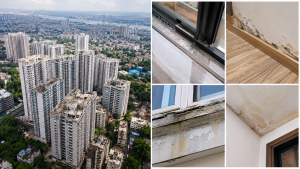


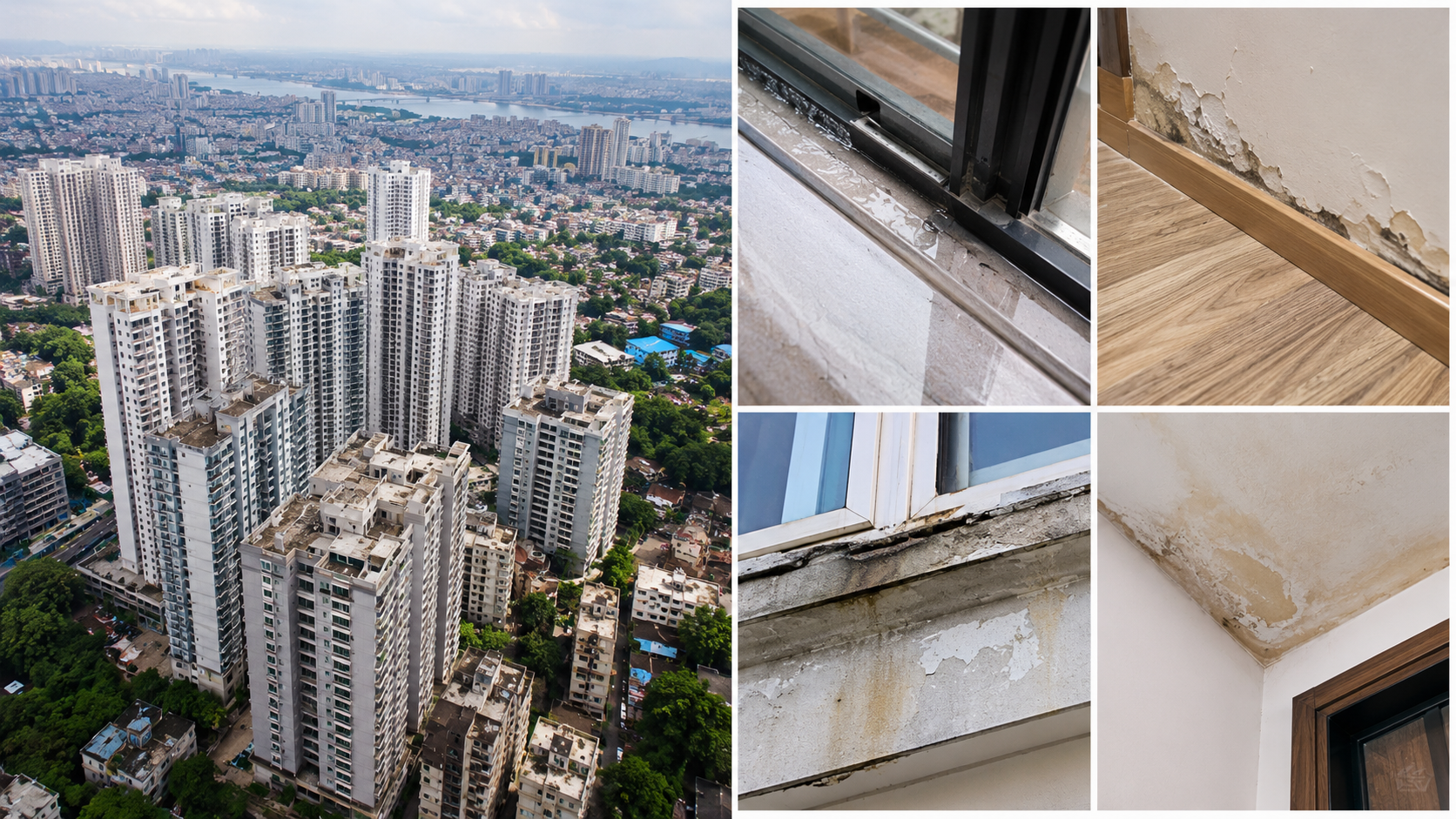
If you live in a modern apartment tower in Kolkata, you’ve probably seen it happen. The monsoon arrives, the rain lashes sideways against the building, and suddenly a small damp patch appears near a balcony door. A few weeks later, the paint starts bubbling. Then the laminate flooring begins to swell at the edges. What seemed like a minor inconvenience turns into an expensive repair project.
The truth is that most high-rise water leakage problems don’t start with a dramatic crack or a broken pipe. They usually begin with tiny weaknesses in windows, balcony doors, sealants, or drainage systems that remain unnoticed for years.
Why High-Rise Buildings Face Unique Leakage Problems
Unlike low-rise houses, high-rise apartments are constantly exposed to wind-driven rain. Residents in areas such as New Town, Rajarhat, EM Bypass, or Salt Lake often notice that rain doesn’t simply fall downward—it strikes the building facade horizontally during storms.
Modern residential towers also favour clean, flush exteriors with minimal projections. While aesthetically pleasing, these designs offer little protection against heavy monsoon rain. As a result, balcony doors, sliding windows, and facade joints become the first line of defence against water intrusion.
A common example is a 20th-floor apartment where rainwater collects in the sliding door track. If drainage holes are blocked or poorly designed, water gradually finds its way indoors, even when all doors and windows are fully closed.
The Real Damage Happens Inside the Apartment
Many homeowners focus only on the visible leak. Unfortunately, water is rarely that simple.
Once moisture enters the structure, it can travel beneath flooring, seep into wall cavities, and accumulate around window upstands. In many Kolkata apartments, homeowners first notice swollen laminate flooring, peeling paint, white salt deposits on walls, or persistent damp patches on ceilings. By then, the water may have been entering the building for months.
In one high-rise complex near Rajarhat, a resident initially complained about a small damp patch beside a balcony door. Investigation later revealed degraded gaskets and failed sealants that had allowed rainwater ingress during multiple monsoon seasons.
Why Temporary Waterproofing Rarely Works
One of the biggest mistakes homeowners make is relying on quick fixes. Applying another layer of paint or injecting ordinary silicone into visible gaps may hide the symptom, but it rarely addresses the source.
Water leakage behaves much like a medical problem. The visible stain is often not the actual cause. The real issue could be hidden inside a facade joint, behind a window frame, or beneath a balcony threshold. Without proper diagnosis, repairs often become an endless cycle of trial and error.
The Importance of Scientific Diagnosis
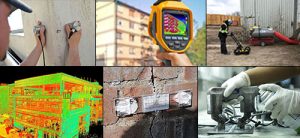
Professional remedial engineering focuses on identifying the exact entry point before recommending a solution. Modern diagnostic tools such as thermal imaging cameras, moisture meters, endoscopic cameras, and structural inspection techniques help engineers determine where water is travelling and why.
Only after understanding the root cause can effective measures be implemented, whether that involves replacing failed gaskets, upgrading weatherproof sealants, improving drainage, constructing raised door sills, or modifying external protections.
Prevention Is Always Cheaper Than Repair
Most high-rise residents spend significant amounts on interiors, flooring, furniture, and decor. Yet very few inspect their windows, sealants, and balcony systems until damage becomes visible.
A professional inspection every few years can identify ageing components before they fail. In a city like Kolkata, where heavy monsoon exposure is a yearly reality, proactive maintenance is often far less expensive than repairing damp walls, damaged flooring, and recurring leakage problems.
When it comes to high-rise water ingress, the best solution is not simply waterproofing—it’s understanding exactly how the water is getting in and stopping it at the source.